Blender
In Stock
Inclusive of all taxes · Free shipping above ₹2599
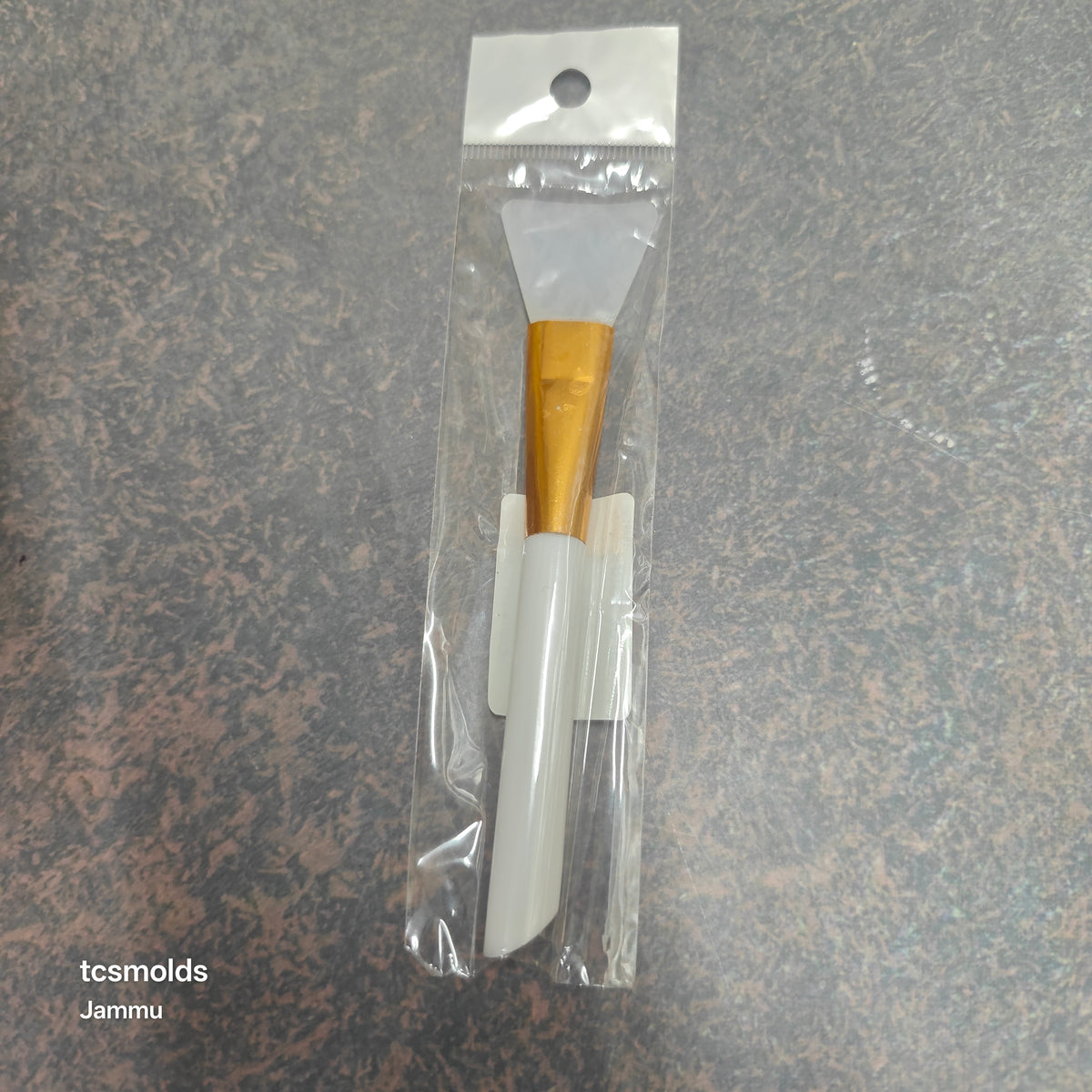
Ask any experienced resin artist what the single most-used tool in their studio is, and the silicone spatula brush will rank alongside the mold itself. The TCS Molds Silicone Spatula Brush is a dual-function resin art tool that combines a flat spatula blade with a flexible brush tip in a single non-stick silicone implement — making it essential for mixing pigments into resin, spreading resin evenly into mold cavities, pushing resin into tight corners, cleaning overflow from mold edges, and applying mold release spray. Unlike plastic or metal tools, silicone is inherently non-reactive with epoxy and UV resin: cured resin peels off the silicone surface cleanly, making this tool endlessly reusable session after session.
Available in stock now at just ₹30, this is one of the highest-value-per-rupee purchases in your entire craft supply collection. It is beginner-friendly — there is no learning curve — and it is equally indispensable for advanced studios producing daily batches of coasters, jewellery, and home décor. If you do not already own one, it should be the next thing you add to your cart.
| Property | Detail |
|---|---|
| Material | Food-grade platinum silicone |
| Function | Dual — spatula blade + flexible brush tip |
| Compatible with | Epoxy resin, UV resin, pigment pastes, wax, soap base |
| Non-stick | Yes — cured resin peels off cleanly |
| Reusable | Yes — wash with IPA or soap and water between sessions |
| Heat resistance | Silicone safe up to standard craft temperatures |
| Quantity per pack | 1 silicone spatula brush |
| Brand | THE CRAFT STATION MOLDS (TCS Molds), Jammu |
The spatula brush is so versatile that most resin artists use it at multiple stages of a single pour. At the mixing stage, the flat spatula blade is used to fold pigment pastes and powders thoroughly into resin — a stirring motion from the bottom of the cup combined with a scraping motion up the sides ensures no unmixed resin is left clinging to the cup walls. This technique, called the two-cup mix method when used in tandem with a second measuring cup, is the gold standard for getting bubble-free, streak-free colour in epoxy resin.
At the pouring stage, the brush tip is used to guide resin into narrow mold cavities, push it into fine detail areas like small letter impressions or intricate geometric shapes, and spread it evenly across the surface of shallow tray molds. At the finishing stage, the spatula edge is used to scrape away resin overflow from the top edges of molds — keeping your workspace clean and your mold edges sharp for a professional demolded result. Between sessions, the same tool is used to clean mold edges and surfaces of uncured resin before it has a chance to harden in an unwanted location.
The most fundamental use of this tool is colour mixing. When working with TCS Molds paste pigments — or any pigment paste, powder, or mica — the spatula blade gives you precise control over how much pigment you introduce into the resin and ensures it is incorporated fully without streaks. Use a scraping-and-folding motion rather than rapid stirring to minimise the introduction of air bubbles. The flexible silicone blade conforms to the curve of the mixing cup, ensuring every trace of pigment is incorporated. For clean colour separation in multi-colour pours, rinse the spatula blade between colours using isopropyl alcohol (IPA) to avoid cross-contamination.
UV resin is thicker than most epoxy formulas and does not self-level in the same way. The brush tip of the spatula brush is ideal for spreading UV resin evenly across the entire floor of a mold cavity, pushing it into corners, and ensuring no air pockets are trapped beneath the surface. For silicone molds with deep or narrow cavities — earring molds, pendant molds, mini crystal molds — the brush tip allows surgical precision that pouring alone cannot achieve. After spreading, cure under a 36W UV lamp for 2–5 minutes per layer, keeping layers shallower than 3–4mm for full cure depth.
Complex silicone molds — especially those with lettering, texture plates, mandala patterns, or fine-feature geometric designs — often have small recesses that a poured resin stream will not fill reliably. Bubbles tend to trap in these fine details, resulting in a demolded piece with pinholes or incomplete impressions. The brush tip of the silicone spatula brush allows you to physically push resin into every detail of the mold before your main pour, ensuring complete coverage. This technique is used by professional resin artists for any mold with features smaller than 3mm.
When you overpour a mold (which is often intentional — slightly overfilling ensures the cavity is fully packed), excess resin flows over the rim and onto the flat mold surface. Left to cure, this creates a "flash" — a thin sheet of cured resin attached to the main piece that must be trimmed off. Using the spatula blade to scrape overflow resin from the mold rim while it is still liquid (within the first 20–30 minutes after pouring) is far easier than sanding or trimming it after cure. It also keeps your silicone mold cleaner, extending its lifespan significantly. Wipe the blade immediately after cleaning using a paper towel dampened with IPA.
While most platinum silicone molds from TCS Molds do not require mold release for standard epoxy pours, there are situations where a thin application of release agent or silicone oil is beneficial — particularly in cold-pour soap making (to assist with 24–48 hour demolding), in very deep 3D molds, or when using highly pigmented UV resin that may bond slightly to the mold surface. The spatula brush can be used to apply a thin, even coat of release agent across the mold cavity surface, ensuring complete coverage without pooling. It can also be used to apply resin to a surface for coating, sealing, or decoupage applications outside of the mold context.
Measure your epoxy resin in a 3:1 ratio — three parts Part A to one part Part B by volume — into a clean mixing cup. Add your chosen TCS Molds paste pigment at approximately 1–3% of the total resin weight. Position the spatula blade flat against the bottom of the mixing cup and use a slow, deliberate folding motion — draw the blade from the bottom of the cup up through the resin to the surface, fold it over, and repeat. Work around the full circumference of the cup over 90–120 seconds of continuous mixing, scraping the cup walls regularly to incorporate any pigment that has settled there.
After mixing, allow the resin to rest for 60 seconds to let large air bubbles rise naturally. If you see bubbles, pass a heat gun briefly over the surface to pop them — do not apply heat for more than 3–5 seconds per pass, and keep the gun at least 20 centimetres from the resin surface to avoid overheating. Pour your mixed resin into the mold, then use the brush tip to guide it into any fine details or corners. Scrape any overflow from the mold rim with the spatula edge within 20 minutes. Allow to cure for 24–48 hours undisturbed on a level surface.
After the pour, clean your spatula brush by wiping both faces of the blade and the brush tip with an IPA-dampened paper towel while the resin is still uncured. Any cured resin on the silicone will peel off as a flexible film — do not use abrasive scrubbers, which can damage the silicone surface over time. Your spatula brush will be clean, flexible, and ready for the next session.
The single greatest advantage of silicone over other tool materials for resin art is how easily it cleans. If resin is still uncured (within the working time of your epoxy, typically 30–60 minutes): wipe with an IPA-dampened cloth or paper towel until clean, then rinse with warm soapy water and air dry. If resin has partially or fully cured on the silicone surface: flex and bend the silicone — the cured resin will crack and peel away as a film, leaving the silicone undamaged. For stubborn residue, soak in warm water for 10 minutes, then peel. Silicone is non-porous, so no resin penetrates the material — it always cleans from the surface only.
Do not boil silicone craft tools or expose them to open flame. Do not use metal scrapers on the silicone surface, as this can cut or nick the material. Properly maintained, a single TCS Molds Silicone Spatula Brush will last for 100+ resin sessions before showing any wear.
This silicone spatula brush is in stock and available for same-day delivery in Jammu. Orders above ₹2,599 ship free pan India — combine this with epoxy resin, pigment pastes, and silicone molds for a complete studio restocking order. We are trusted by 5,000+ resin artists across India and offer a 7-day return policy on all products. Bulk orders for studio setups, art schools, and workshop kits are available with preferential pricing on WhatsApp. Our team provides live beginner-friendly WhatsApp support for artists who are new to resin and need guidance on mixing ratios, tool techniques, or troubleshooting.
Pair this tool with our epoxy resin, colour pigments, silicone molds, and our full tools and sprays collection for a complete resin art setup.
Yes — this silicone spatula brush is fully compatible with both epoxy resin (3:1 mixing ratio, 24–48 hour cure) and UV resin (single component, cures under UV lamp in 2–5 minutes per layer). Silicone does not react with any standard resin chemistry, making this tool universally compatible across all resin types used in craft applications.
No — silicone is inherently non-porous and does not absorb resin. Even deeply pigmented resin (black, navy, burgundy) does not permanently stain the silicone surface. Any colour tint that appears to remain after an IPA wipe will peel away with the cured resin film when you flex the tool. The silicone returns to its original appearance after each cleaning cycle.
Both the spatula brush and TCS Molds silicone molds are made from platinum-cured silicone — the same food-grade, BPA-free material used across the product range. This ensures the same non-stick, non-reactive performance in both the molds you pour into and the tool you use to mix and spread your resin.
Yes — the silicone spatula brush is equally effective for candle-making applications. Use it to mix candle dye into melted soy wax (50–55°C) or paraffin wax (60–65°C), stir fragrance oils into the wax blend at 6–10% by weight, and scrape wax from pouring jugs and mixing cups. The silicone withstands the temperature range used in standard candle making without warping or degrading.
With proper cleaning after each session, this silicone spatula brush is rated for 100+ uses. The non-stick silicone surface does not degrade with repeated resin contact when cleaned correctly. The only things that shorten its lifespan are physical cuts from metal tools, exposure to extreme heat (open flame or oven temperatures above standard candle-making range), and solvent exposure beyond IPA (acetone can degrade silicone over time, so use IPA for cleaning only).
At ₹30, the TCS Molds Silicone Spatula Brush is the easiest upgrade you can make to your resin studio today. Add it to your cart alongside epoxy resin, pigments, and silicone molds for a complete order above ₹2,599 and qualify for free shipping across India. Running an art school, workshop, or resin business and need tools in bulk? Message us on WhatsApp at +91 97971 37137 for studio kit pricing — we supply resin artists across India with same-day dispatch from Jammu.
7-day return policy on unused, unopened items.
⚠️ Video proof required for returns: To be eligible for a return or replacement, you must record an unboxing video at the time of opening your package. Claims submitted without an unboxing video cannot be processed.
📱 WhatsApp +91 9797137137 to initiate a return. Our team responds within 2 hours.
5,000+ artists trust TCS Molds. Tag us @tcsmolds to be featured.
📸
Share your work on Instagram with @tcsmolds or send us a photo on WhatsApp. We feature the best customer work here.
📤 Share Your Work📱 Follow us on Instagram for daily inspiration
@tcsmolds/Wash with mild soap and warm water before first use. Dry completely.
Optional but recommended — thin coat of mold release spray for easy demolding.
Combine resin and hardener in the correct 3:1 ratio. Stir slowly for 3–4 minutes.
Pour slowly to avoid bubbles. Use a heat gun to pop surface bubbles. Let cure 24–48 hrs.
Gently flex the mold to release. Sand edges if needed. Polish with resin polish for mirror finish.
Install Judge.me from the Shopify App Store (free) to collect and display reviews here.
Share feedback on WhatsApp